
In the Style of Caravaggio — Tenebrism at Studio24London
Look at the background in these images. Pure black. Not dark grey. Not underexposed. Black. That’s the starting point for everything Caravaggio ever did, and it’s the starting point for this shoot.
Michelangelo Merisi da Caravaggio didn’t paint with light. He carved figures out of darkness using a single hard source, then let the rest of the frame fall to nothing. The technique is called tenebrism — an extreme form of chiaroscuro where shadows don’t just shape a face, they consume everything around it. Working at roughly 85% dark to 15% light, his canvases operate at a contrast ratio most modern photographers would consider a mistake on the monitor.
It isn’t a mistake. It’s the point.
What You’re Looking At
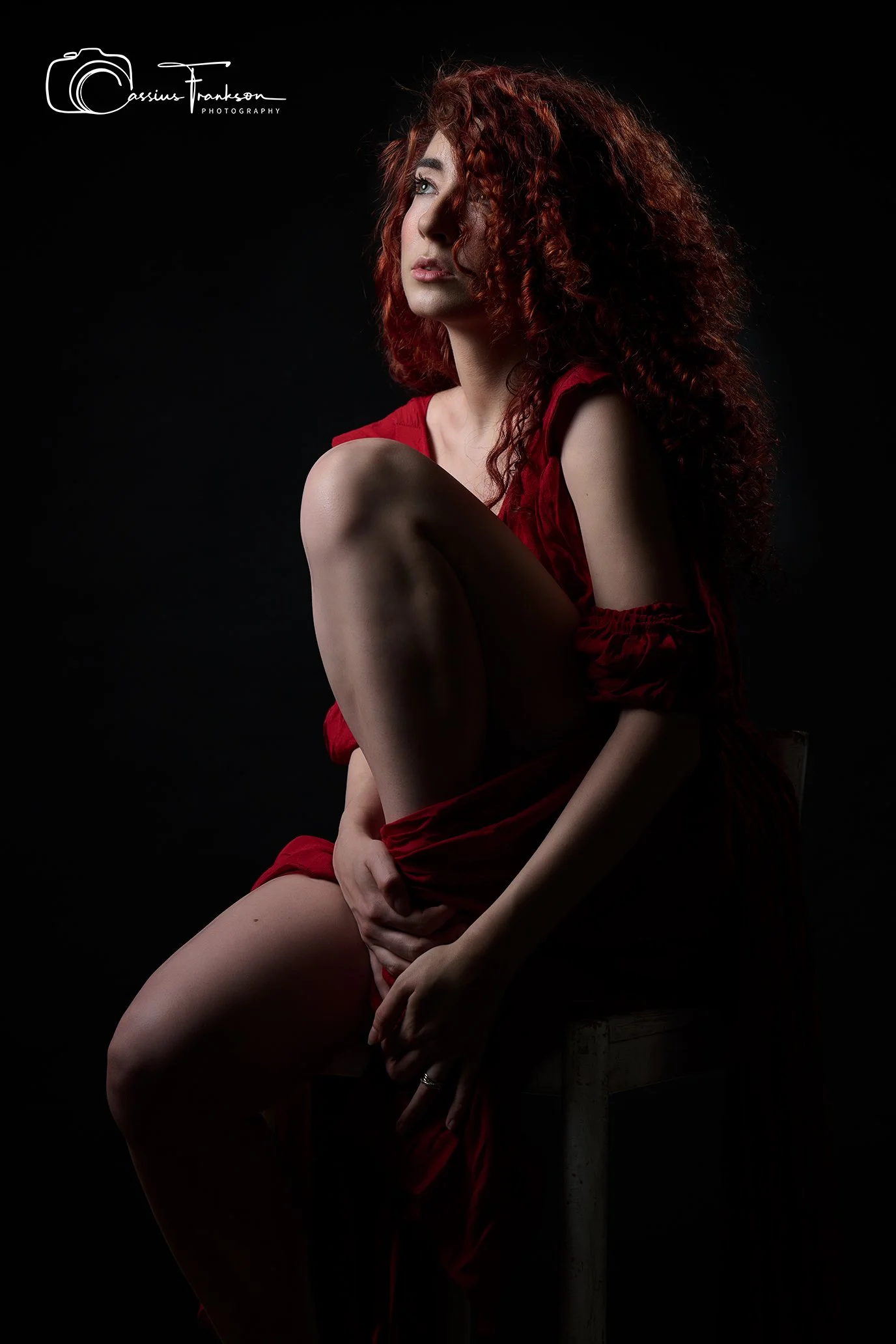
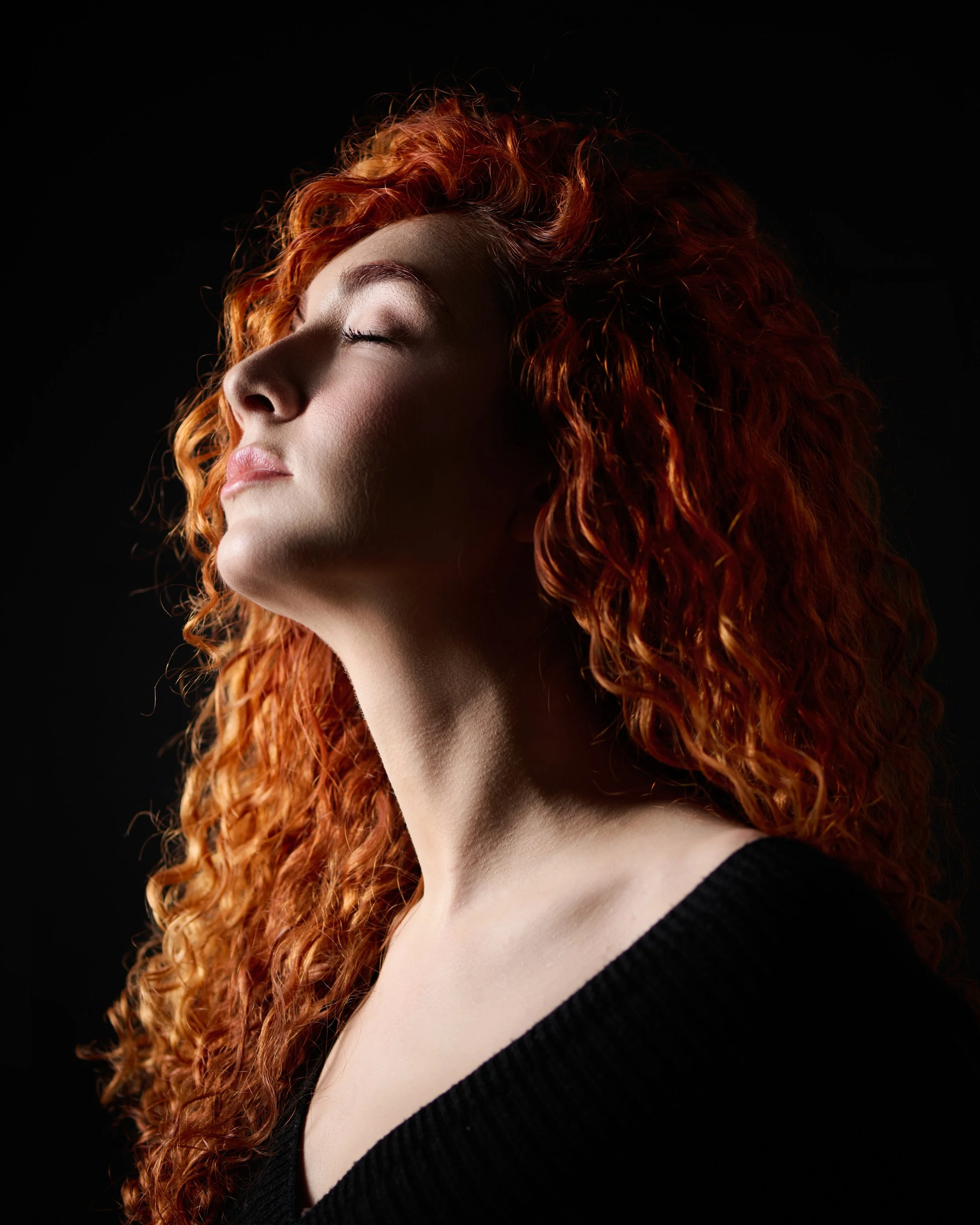
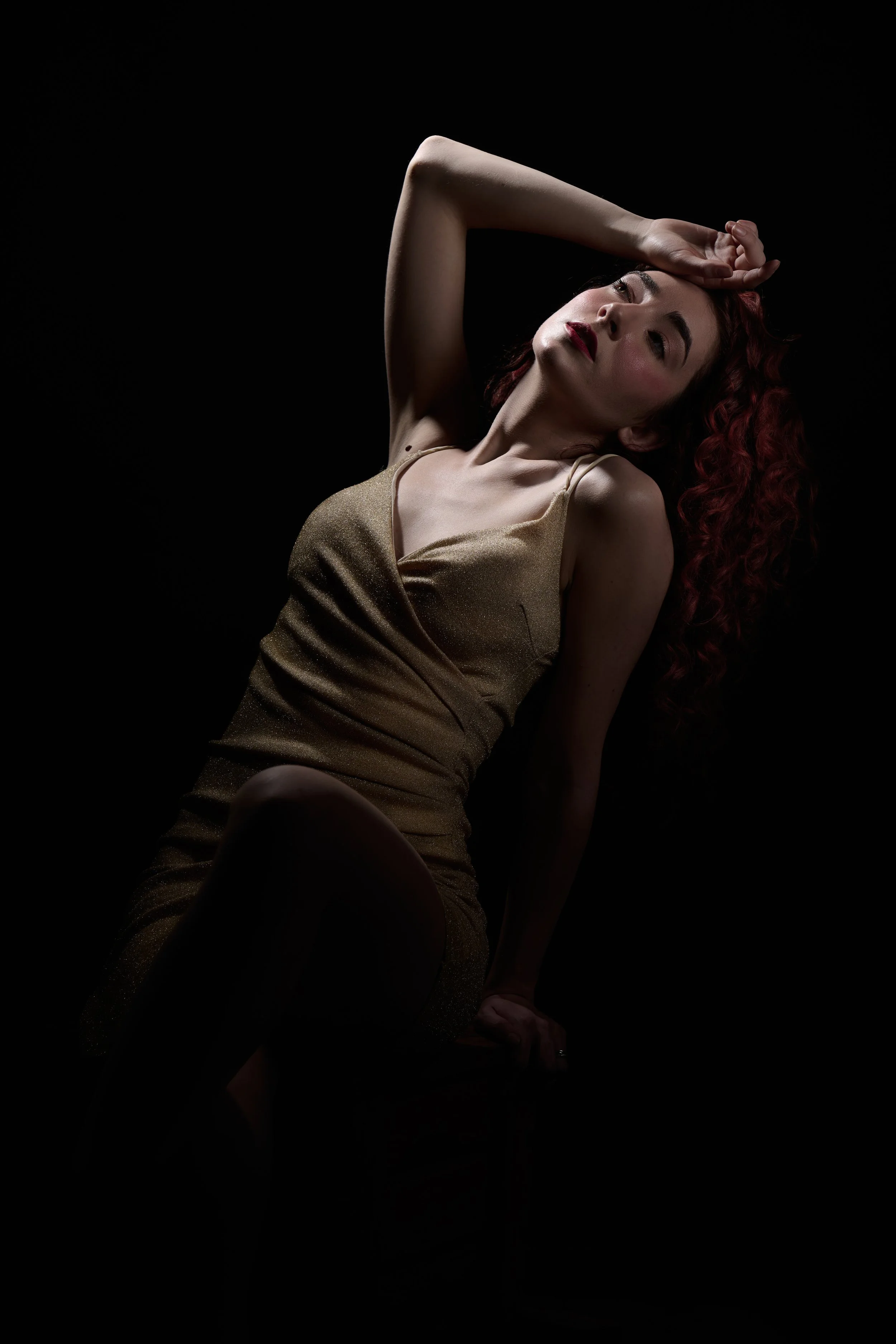
The images in this series were shot with a single gridded key light positioned high and angled steeply down — no fill, no reflector, nothing to soften what the shadows are doing. A black V-flat on the shadow side absorbed any stray bounce from the studio walls. The backdrop was placed far enough back to fall to pure black in-camera.
The result is exactly what it looks like. Figures emerging from darkness. Skin catching light at the planes that face the source, then dropping away sharply where they don’t. The red hair acts as Caravaggio’s saturated vermilion — a warm, rich colour note against the void that gives the image heat without lifting the shadows.
The gold dress in the third frame is straight out of his palette — yellow ochre and raw sienna against pitch black and pale skin. It shouldn’t work at that contrast level. It absolutely does.
The Colour Is Doing Real Work
One thing that’s easy to miss in Caravaggio’s paintings, and easy to replicate badly in photography, is the warmth of the light itself. His single source — whether implied candlelight, a window, or an ambiguous beam — is always warm. The key on these images was set to hold that warmth in the highlights while the shadows went cool and dark. The red wardrobe in the final frame pushes the Caravaggio reference furthest: saturated vermilion against black, the figure seated and turned upward, light raking across the planes of the face and arms while everything below falls away.
Why It Works in a Modern Studio
The technical translation is straightforward once you stop hedging. A bare head with a 20° honeycomb grid. High placement, steep angle. No fill. Black V-flat on the shadow side. Background at least 3 metres back. Ratio pushed to 8:1 or beyond — far enough that the shadow side reads as void, not shadow.
The harder part is trusting the darkness. Every instinct in studio photography tells you to open the shadows, add a little fill, make sure you can see detail on both sides of the face. Caravaggio’s entire method is built on ignoring that instinct. The drama lives in what you can’t see as much as what you can.
These images are part of the work produced at Studio24London as part of the Old Masters Lighting Masterclass series. If you want to understand how to rig this for yourself — the ratios, the modifier geometry, the colour temperature decisions — book your place at cassiusfphotography.com.